For Empire of the Sun I chose the gram of the dead tree in the background. Thinking over this gram, it actually is a really good gram in the context of epic cinema. From the first part of it, Empire of the Sun is in a way a "coming of age" film. The tree in this context could be seen as a sign of growth of the character. So far the tree was only seen once in the film and it was in the very beginning before Christian Bale got thrown into the flame. But this concept of growth and the tree really can be seen in all epic cinema.
Traditionally in epic cinema one of the rules we see is that the hero starts a journey at one place and in the ends returns to that place (whether it be home, or someplace else). Before he/she returns to that place they go through a process of growth and come back to their home point a changed person. We see this process of growth in a lot of the movies we watched this semester (Wizard of Oz, The Searchers, Ben Hur, etc.) and is a tradition of epic cinema.
Sunday, April 29, 2012

Monday, April 23, 2012
Rush 7: Dil Se
The gram I chose for Dil Se was a tile. Common associations with tile include: decor, interior, exterior, ground, and floor. When one thinks of the word ground, various meanings and associations come to mind such as: dirt, cold, wet, solid, deep, grave, gravel, etc. If we look at grave in Dil Se, even though this word is far removed from the original gram, we can see it relate a lot to the movies themes and structure.
If we take a step back and look at the traditional Bollywood movie, we see the characters put in a lot of life or death situations (situations that could possibly put them in a grave?) throughout the film, and the musical numbers or dance breaks, are a way to lighten the heaviness of the situation. For example in Dil Se, the very beginning there's a raging storm at the train station that we meet our protagonist, Amar, at. It's here he runs into Meghna for the first time. Throughout this scene as audience members we are lead to believe something bad could happen due to the super heavy downpour of rain, the darkness of the setting, and the fact that he's all alone at this train station. It looks like a scene that could be seen in a horror movie with a haunted house on a hill. Soon after this scene we are taken to a light hearted dance break before the movie continues. Amar could have been just as easily sent to his grave at the train station if he was struck by lightning, get hit by a train he couldn't see, or the cloaked figure (who turns out to be Meghna) could have murdered him. But instead the life or death situation is reversed with the light hearted dance break.
Also the word grave, can relate to movies themes. One of the main themes is terrorism/war. Meghna is part of a resistance group which kills people, therefore sending them to their graves. Towards the latter half of the movie there is a constant feeling of war and terrorism going on which could result in death, again relating to the word grave. Also the theme of love in this movie has a sick relation to grave. We hear the saying "all is fair in love and war," and literally this movie a great example of that saying. The love of Amar and Meghna, two lovers on two different sides of the train track (Romeo & Juliet-esque), meets its bitter fate in the end when both of them are sent to their graves when Amar hugs Meghna resulting in the bomb that is attached to her to go off and kills them both.
This look at the word grave originating for my gram of tile goes to show that the camera catches a lot more than we think. We can relate all these extra rinds to a deeper meaning and understanding of the movie.
If we take a step back and look at the traditional Bollywood movie, we see the characters put in a lot of life or death situations (situations that could possibly put them in a grave?) throughout the film, and the musical numbers or dance breaks, are a way to lighten the heaviness of the situation. For example in Dil Se, the very beginning there's a raging storm at the train station that we meet our protagonist, Amar, at. It's here he runs into Meghna for the first time. Throughout this scene as audience members we are lead to believe something bad could happen due to the super heavy downpour of rain, the darkness of the setting, and the fact that he's all alone at this train station. It looks like a scene that could be seen in a horror movie with a haunted house on a hill. Soon after this scene we are taken to a light hearted dance break before the movie continues. Amar could have been just as easily sent to his grave at the train station if he was struck by lightning, get hit by a train he couldn't see, or the cloaked figure (who turns out to be Meghna) could have murdered him. But instead the life or death situation is reversed with the light hearted dance break.
Also the word grave, can relate to movies themes. One of the main themes is terrorism/war. Meghna is part of a resistance group which kills people, therefore sending them to their graves. Towards the latter half of the movie there is a constant feeling of war and terrorism going on which could result in death, again relating to the word grave. Also the theme of love in this movie has a sick relation to grave. We hear the saying "all is fair in love and war," and literally this movie a great example of that saying. The love of Amar and Meghna, two lovers on two different sides of the train track (Romeo & Juliet-esque), meets its bitter fate in the end when both of them are sent to their graves when Amar hugs Meghna resulting in the bomb that is attached to her to go off and kills them both.
This look at the word grave originating for my gram of tile goes to show that the camera catches a lot more than we think. We can relate all these extra rinds to a deeper meaning and understanding of the movie.
Sunday, April 1, 2012
Rush 2: Home Is Where The Hearth Is
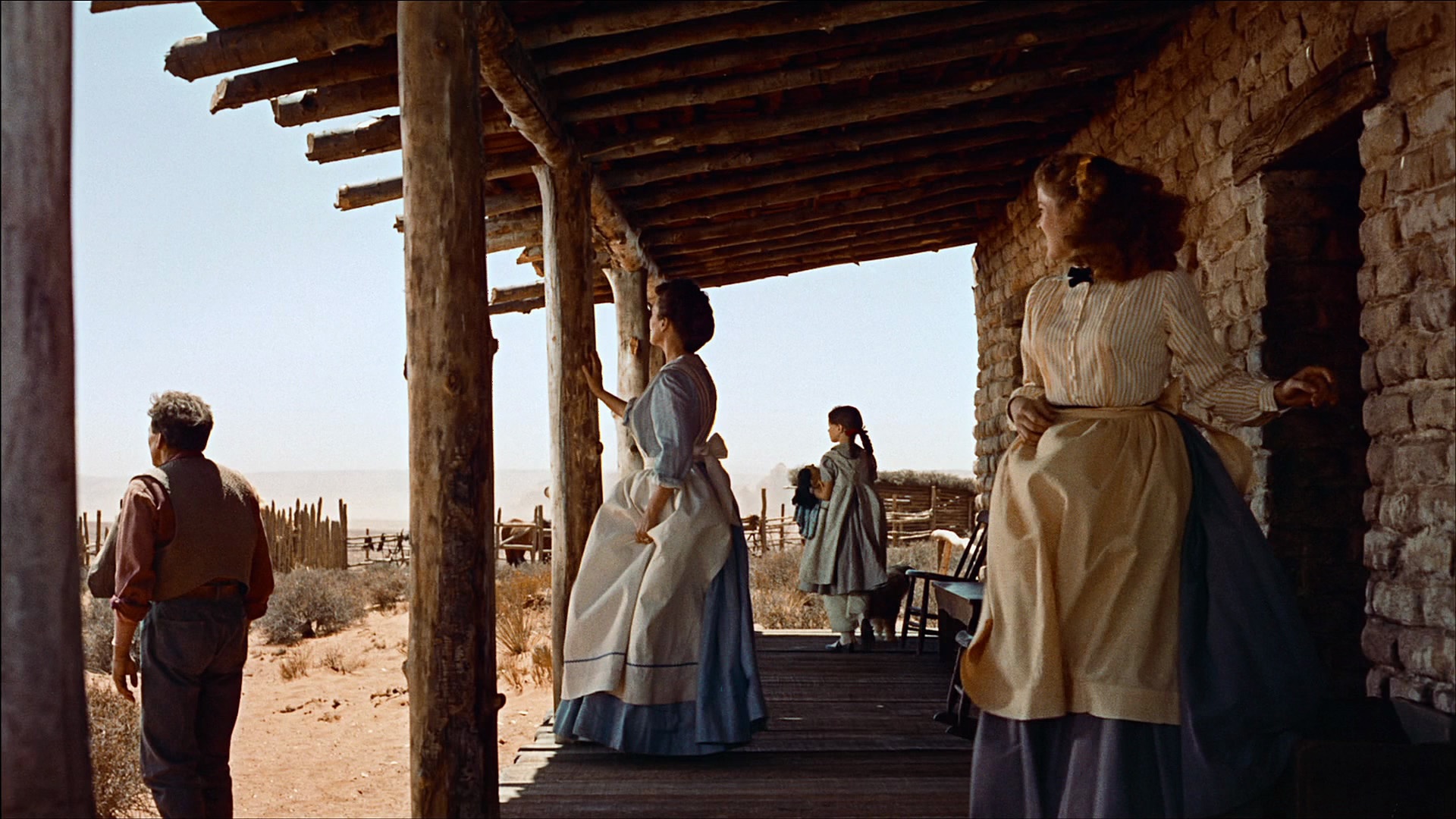
Another thought I that popped into my head about the lamp and the flame in it is Hestia, the greek goddess of the hearth & home. Traditionally, Hestia was represented by a living flame (sometimes in a lamp or a bowl), architecture, and the home. In The Searchers the kerosene lamp flame makes an appearance, it's within the home. With this occurring, this also for me reinforced the strength and closeness of the family and the intimacy of their home. Also, it re illiterates the theme of The Odyssey which we find in all epic cinema movies we've seen thus far.
Tuesday, March 27, 2012
Rush 5: Final Project
 |
Tuesday, March 6, 2012
EPIC CINEMA RUSH 4: WE'RE OFF TO SEE THE WIZARD

Monday, February 27, 2012
RUSH 3 - BEN-HUR
For my object this week I chose fire (or more specifically the fire that lit the torches). Immediately when we think fire we think of words like: hot, burning, forest fire, etc. When looking at it in the context of Ben-Hur I feel like burning is the most suitable choice to describe it.
We first see the fire in the scene when Juda and Messala reunite. The fire is seen here lighting the torches. In this scene its used as a foreshadowing. As the scene progresses we can see that the bridges between these two friends have burned as their fiery argument progresses. The passion that these two hold for their own ideals is also ignited in this scene.
The next time we see fire is when the ship Juda is captured on is attacked. He sits with the boat's commander on a raft and watches as the ship burns in the distance. It's almost as if he's watching his old life and what he knew burn away before him. We see the fire used as a metaphor, the ship representing his old life, and the fire burning it to ashes. This ship attacks marks a pivotal turning point in the movie as Juda begins to assimilate into the Roman culture.
The uses of fire in this movie to me were selective. To me I thought fire would be used more to light torches or a stove in the background (since fire was used quite often in biblical days). But seeing as Ben-Hur is a biblical story, it makes sense that the use of fire was controlled. Fire Biblical is really important. The burning bush that Moses sees in the desert is a very well known biblical symbol and story. Fire is an important thing to consider when looking at Ben Hur and any biblical story.
Sunday, January 29, 2012
Epic Cinema Rush 1
1. What are you up to at Cornish?
- At Cornish I am currently a senior Acting major (Graduating in May ahh! o.0) I just finished up my senior thesis project this weekend. I performed in Yellow Face, a play by David Henry Hwang. My friend Sara directed me in it. It went really well and I was really proud with the work I did.
2. What's going on outside Cornish?
- Outside of Cornish I am currently trying to establish myself. I'm planning to audition for the TPS unifieds coming up this February. Also I plan to try and do as much film work as I can get in Seattle. I plan to move to LA in June. Recently I also appeared as an extra in an XBOX commercial (posted below) , can you find me? :)
-
3. What's your relation to film?
- Film is something I have a very close relationship to. As an actor I want to do more film in the future. The main reason people see live theatre is so they can feel something. I feel film used to do this but has lost it in recent years. I want to work on films so I can bring that feeling back and create something that transcends the screen. We need more art and craft back in our films. In the future I would also like to do television, preferably a series on HBO or Showtime, two channels I feel take what they're putting out very seriously and put a lot of detail and craft in their product.
4. Do you have any hopes and/or expectations for this course?
- This being my second film course, I hope to just expand my knowledge and gain a deeper understanding for film. I also hope to use this film knowledge in my career path.
5. What would you be doing five years from now if you could script your own dream job (within the realm of possibility)?
- Five years from now I would hope to be established in the LA area at the very least. I plan to move to LA in June and work on establishing myself. I would also hope in the future, I can work on my play/screen writing a bit and further that.
Subscribe to:
Comments (Atom)